
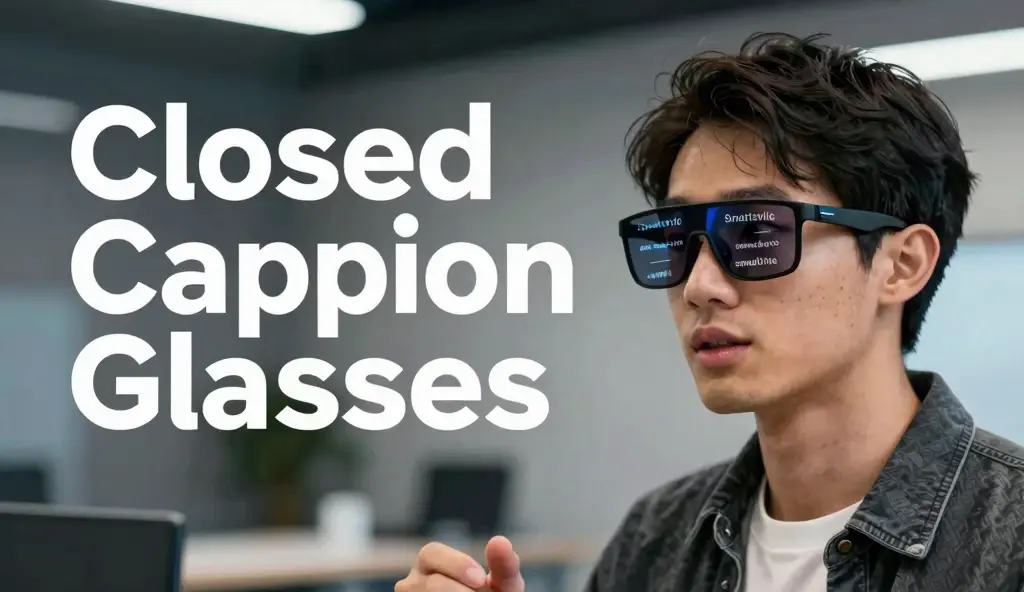
Closed-caption glasses are advanced wearable devices that display real-time subtitles directly in your line of sight.
Instead of looking at a phone or TV screen, you see spoken words converted into text inside your glasses while watching videos, attending meetings, or even having live conversations.
In 2026, this technology will be powered by AI speech recognition and augmented reality (AR), making communication more accessible than ever.
These glasses are designed primarily for people who are deaf or hard of hearing, but they are also widely used for language learning, travel translation, workplace communication, and media consumption.
This guide explains everything about closed caption glasses in a simple, detailed, and structured way.
What Are Closed Caption Glasses
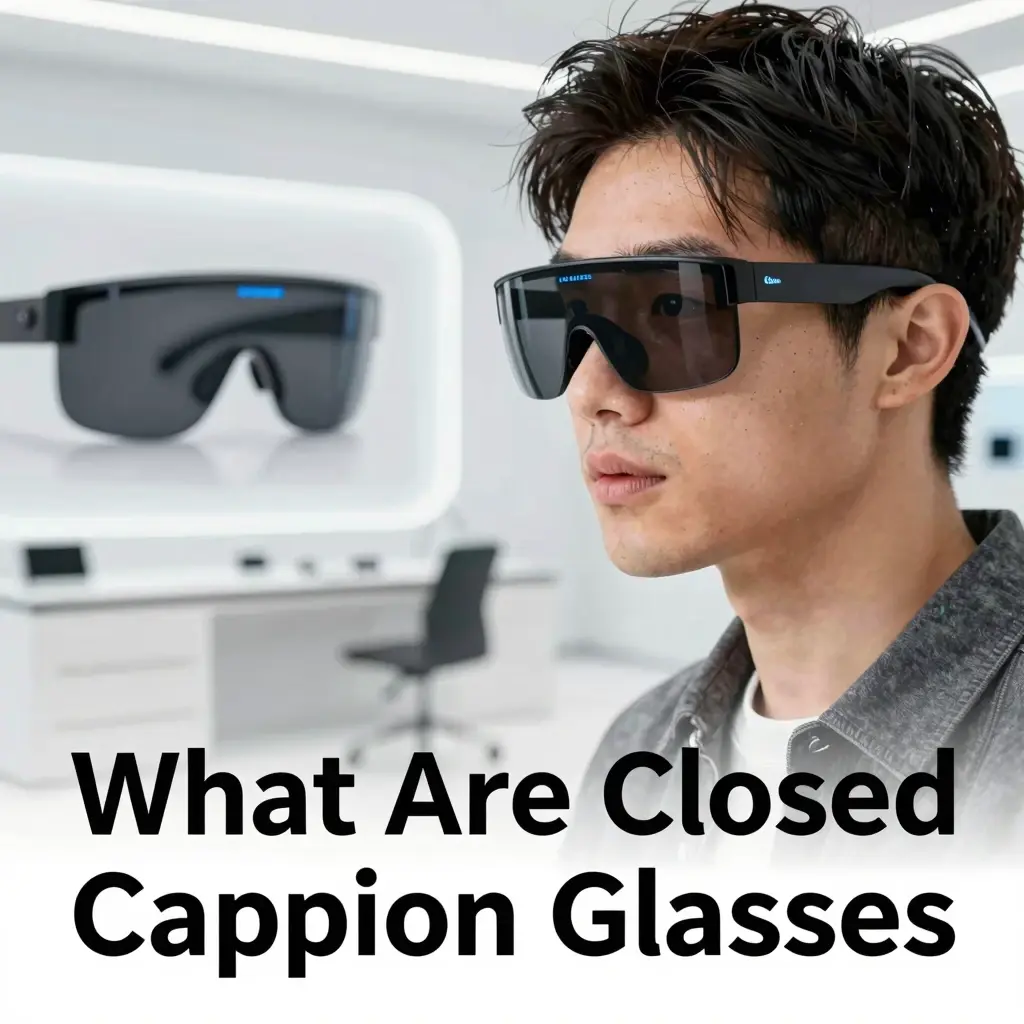
- 🕶️ Wearable smart glasses that show subtitles in real time
- 💬 Convert spoken audio into readable text
- 👀 Display captions directly in your vision field
- ♿ Designed for accessibility support
- 🌍 Can work in multiple languages
- 🎧 Use built-in microphones for audio capture
- 📱 Often connected to smartphones or apps
- 🧠 Powered by AI speech recognition systems
- 🔊 Capture live speech from surroundings
- 🎬 Used for videos, events, and conversations
- 📡 Require data processing systems
- 🚀 Part of modern AR technology
- 💡 Provide hands-free caption viewing
- 📊 Improve communication accessibility
- 📖 Support real-time transcription
- 🎯 Designed for live environments
- 🧩 Integrate with digital platforms
- 📁 Can store text transcripts
- 🌟 Growing assistive technology trend
- 🔋 Battery-powered wearable device
- ❤️ Improve inclusive communication
How Closed Caption Glasses Work
- 🎤 Microphones capture spoken words
- 🧠 AI converts speech into text instantly
- 📡 Cloud or onboard processing analyzes audio
- 🕶️ Text is projected onto lenses
- 👀 User sees captions in real time
- 🔄 Continuous speech-to-text conversion
- 📱 Syncs with mobile apps
- 🌍 Detects multiple languages
- 🔊 Filters background noise
- 🎯 Aligns text with spoken timing
- 💬 Displays line-by-line captions
- 🎬 Works during live playback
- 🧩 Uses augmented reality overlays
- 📊 Learns from speech patterns
- 🚀 Updates through software improvements
- 📖 Stores transcripts for later use
- 💡 Adjusts text clarity dynamically
- 📡 Requires internet for best performance
- 🧠 Adapts to different accents
- ⚙️ Runs in real-world environments
- 🌟 Designed for instant readability
Key Features of Closed Caption Glasses
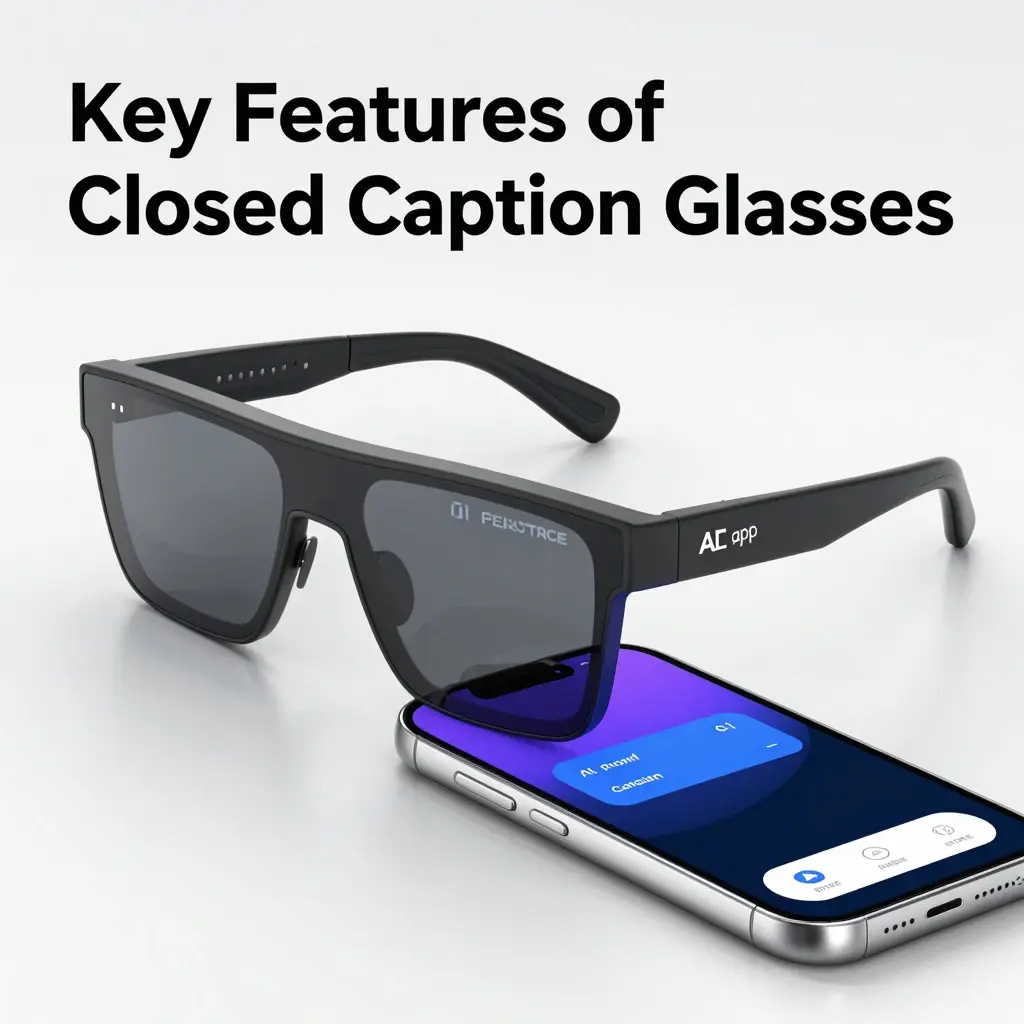
- 🕶️ Transparent AR display lenses
- 💬 Real-time caption streaming
- 🌍 Multi-language translation support
- 🔊 Noise cancellation microphones
- 📱 Smartphone connectivity
- 🧠 AI-based speech recognition
- 👀 Adjustable text placement
- 🎯 Custom font size options
- 🔋 Rechargeable battery system
- 📡 Cloud-based processing
- 🎬 Media sync mode
- 🧩 Accessibility settings panel
- 📊 High accuracy transcription
- 📖 Transcript saving feature
- 🚀 Fast caption response time
- 💡 Offline limited mode
- 🎧 Enhanced audio clarity
- 🌟 Lightweight ergonomic design
- 📍 Indoor/outdoor usability
- ⚙️ App-controlled interface
- 🔐 Privacy and encryption features
Who Uses Closed Caption Glasses
- ♿ Deaf and hard-of-hearing users
- 🎓 Students in classrooms and lectures
- 🌍 Travelers needing translation help
- 💼 Professionals in meetings
- 🎬 Movie and theater viewers
- 🧠 Language learners
- 📊 Researchers and analysts
- 🧑🏫 Teachers and educators
- 🎤 Event attendees and conferences
- 📱 Tech early adopters
- 🧩 Accessibility advocates
- 🏢 Corporate trainers
- 🎧 Podcast transcription users
- 📖 Study and reading support users
- 🎥 Content creators
- 🧑💻 Remote workers
- 🧑⚕️ Healthcare communication support
- 🧑🔬 Research labs
- 🎯 Public speaking environments
- 🌟 Everyday accessibility users
Benefits of Closed Caption Glasses
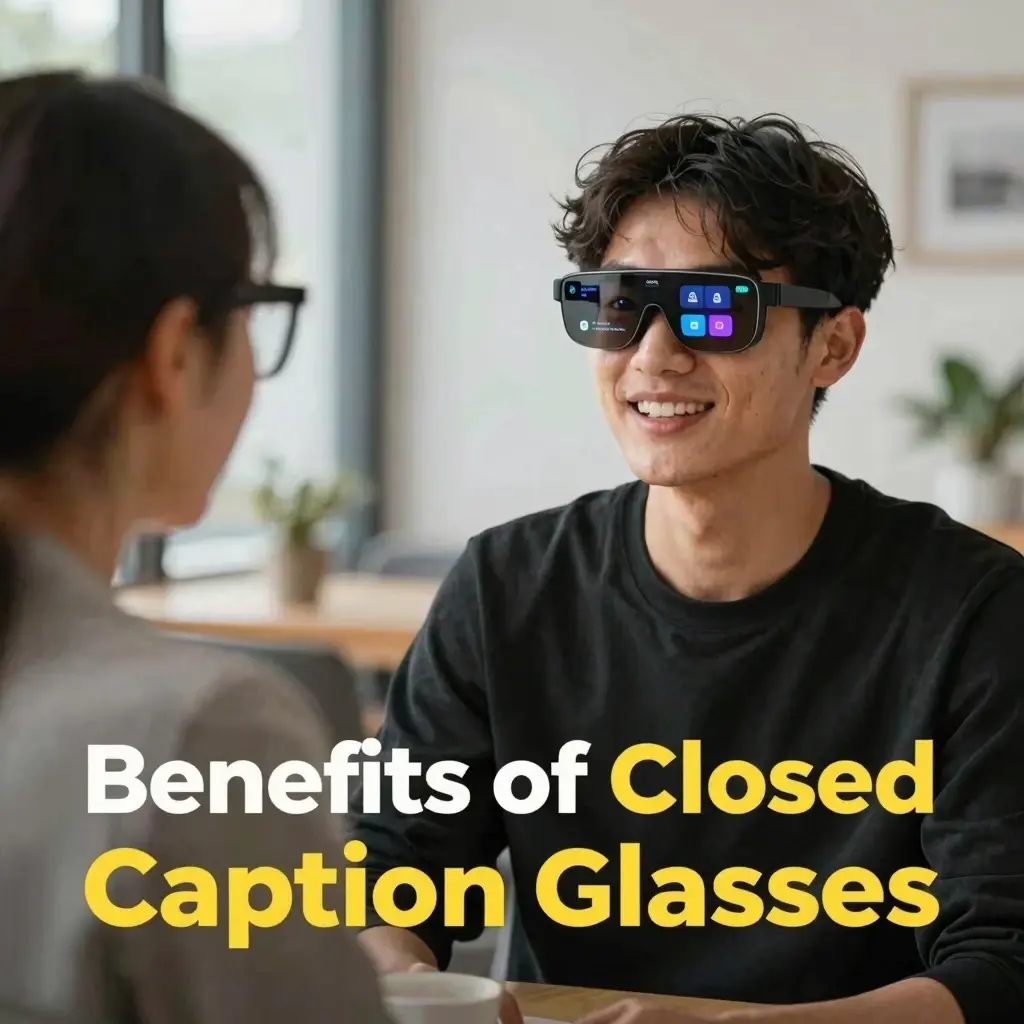
- ♿ Improve accessibility for hearing loss
- 🧠 Enhance understanding of speech
- 🌍 Provide real-time translation
- 👀 Enable hands-free caption viewing
- 🎯 Help in noisy environments
- 📱 Reduce need for screens
- 💬 Improve communication clarity
- 🎬 Enhance entertainment experience
- 📊 Support education and learning
- 🚀 Increase workplace productivity
- 📖 Help language learning
- 🔊 Reduce miscommunication
- 🧩 Assist in professional settings
- 💡 Enable multitasking
- 🌟 Promote independence
- 🎧 Improve listening comprehension
- 📡 Support live interactions
- 🏫 Enhance classroom inclusion
- 💼 Improve business communication
- ❤️ Promote social inclusion
- 🌈 Create accessible environments
Limitations of Closed Caption Glasses
- 🔋 Limited battery life
- 📡 Dependence on internet connectivity
- 🧠 Possible AI transcription errors
- 💰 High cost for advanced models
- 👓 Can feel bulky for long use
- 🌍 Limited language coverage in some devices
- 🔊 Background noise affects accuracy
- 📱 Requires smartphone pairing
- ⚙️ Setup complexity for beginners
- 🎯 Not always perfectly real-time
- 📊 Performance varies by environment
- 🧩 Device compatibility issues
- 💡 Limited offline capability
- 🎬 Not widely available everywhere
- 🧠 Accent recognition challenges
- 📖 Requires user learning curve
- 🚀 Still developing technology
- 🔐 Privacy concerns with audio processing
- 📍 Less effective in crowded noise
- 🌟 Continuous updates required
Closed Caption Glasses vs Regular Subtitles
- 🕶️ Glasses show captions in real-world vision
- 📺 Subtitles appear only on screens
- 👀 Glasses are hands-free
- 📱 Subtitles require devices
- 🎯 Glasses work in live environments
- 💬 Subtitles are pre-encoded
- 🌍 Glasses can translate speech instantly
- 🎬 Subtitles are media-based
- 🧠 Glasses rely on AI recognition
- 📊 Subtitles are file-based
- 🔊 Glasses support live conversations
- 📖 Subtitles mainly for video content
- 🚀 Glasses offer mobility
- 💡 Subtitles are more universal
- ♿ Both support accessibility
- 🎧 Glasses help in real-time communication
- 📡 Glasses require processing systems
- 📺 Subtitles need playback platforms
- 🌟 Glasses are an emerging tech
- 📊 Subtitles are an established format
Where Closed Caption Glasses Are Used
- 🎬 Movie theaters and screenings
- 🏫 Schools and universities
- 🏢 Corporate offices
- 🎤 Conferences and events
- 🌍 Travel and tourism
- 🧑⚕️ Healthcare communication
- 🎧 Media production environments
- 📖 Study and learning sessions
- 🎥 Video content consumption
- 🧑🏫 Teaching environments
- 🧠 Language training centers
- 💼 Business meetings
- 📱 Remote work setups
- 🧩 Accessibility programs
- 🎯 Public speaking events
- 📊 Research institutions
- 🏠 Personal daily communication
- 🚀 Tech exhibitions
- 🌟 Assistive tech programs
- ❤️ Inclusive social environments
Types of Closed Caption Glasses
- 🕶️ Basic transcription glasses
- 🧠 AI-powered smart glasses
- 🌍 Real-time translation glasses
- 🎧 Audio-enhanced caption glasses
- 📡 Cloud-connected AR glasses
- 📱 Smartphone-linked models
- 🔋 Offline-capable versions
- 🎬 Media-focused glasses
- 🧩 Accessibility-first devices
- 💡 Developer-focused smart glasses
- 📊 Enterprise communication models
- 🚀 High-end premium AR glasses
- 📖 Educational learning glasses
- 🧑⚕️ Healthcare communication models
- 🎤 Event-specific caption devices
- 🌟 Consumer lifestyle glasses
- 🔊 Noise-adaptive glasses
- 🧠 Neural AI-enhanced versions
- 📍 Lightweight travel models
- ⚙️ Modular smart glasses
- 💬 Experimental prototype devices
Technology Behind Caption Glasses
- 🧠 Machine learning speech recognition
- 🎤 Real-time audio capture systems
- 📡 Cloud computing processing
- 🕶️ AR (augmented reality) display
- 🔊 Noise filtering algorithms
- 🌍 Language detection AI
- 💬 Natural language processing (NLP)
- 📊 Context-aware transcription
- 📱 Mobile app integration
- 🚀 Edge computing improvements
- 🔋 Power-efficient hardware design
- 📖 Text rendering systems
- 🎯 Latency optimization technology
- 🧩 Multi-speaker detection
- 🌟 Adaptive learning systems
- 📡 5G/fast connectivity support
- 💡 Voice segmentation models
- 🧠 Accent recognition AI
- 🎬 Multimedia sync engines
- 🔐 Data encryption layers
- ⚙️ Firmware update systems
Future of Closed Caption Glasses
- 🚀 More accurate AI transcription
- 🌍 Real-time global translation everywhere
- 🧠 Emotion-aware speech recognition
- 🕶️ Lightweight everyday eyewear design
- 🔋 Longer battery life technology
- 📡 Faster low-latency processing
- 💬 Improved accent understanding
- 🎯 Wider language support
- 📱 Seamless smartphone integration
- 🎬 Mass adoption in entertainment
- 🧩 Smart assistant integration
- 📊 Workplace communication standard
- 🔊 Better noise filtering systems
- 💡 Offline AI improvements
- 👓 Stylish consumer-ready models
- 📖 Education system adoption
- 🌟 Global accessibility rollout
- 🧑⚕️ Healthcare communication use
- 🎧 Live event standardization
- ❤️ Fully inclusive communication tech
Tips for Using Closed Caption Glasses
- ✨ Keep lenses clean for clarity
- 🎯 Use in low-noise environments first
- 📊 Calibrate speech settings properly
- 🧠 Update AI software regularly
- 📱 Connect to a stable internet
- 🔋 Charge the device fully before use
- 🌍 Select correct language settings
- 🔊 Reduce background noise when possible
- 👀 Adjust text size for comfort
- 🧩 Practice in short sessions
- 📖 Use for learning or training
- 🎬 Test with different content types
- 💡 Customize display positioning
- 📡 Ensure strong connectivity
- 🚀 Restart the device if lag occurs
- 🧠 Train AI with your voice patterns
- 🎧 Use in meetings for clarity
- 🧾 Save transcripts when needed
- 🌟 Use accessibility modes
- ❤️ Choose comfortable wear settings
FAQs
Q1. What are closed caption glasses?
A: They are smart wearable glasses that display real-time subtitles of spoken words in your field of view.
Q2. How do caption glasses work?
A: They use microphones and AI to convert speech into text displayed on AR lenses.
Q3. Who uses closed caption glasses?
A: They are used by deaf users, students, professionals, travelers, and language learners.
Q4. Do caption glasses need the internet?
A: Most models require the internet for real-time AI transcription and translation.
Q5. Are closed caption glasses accurate?
A: They are increasingly accurate but may still struggle with noise and accents.
Q6. Can caption glasses translate languages?
A: Yes, many advanced models support real-time translation between languages.
Conclusion:
Closed caption glasses represent the future of accessible communication, combining AI, speech recognition, and augmented reality to deliver real-time subtitles directly into a user’s field of vision.
While still evolving, they already offer powerful benefits for accessibility, education, travel, and professional communication.
As technology advances in 2026, these glasses are expected to become lighter, smarter, and more affordable, making real-time captioning a normal part of everyday life.

Emma Richardson is a passionate and creative content writer who specializes in crafting engaging captions, social media content, and lifestyle-inspired writing. With a deep understanding of modern digital trends, she helps readers express emotions, moments, and stories through perfectly written captions that connect and inspire.