
A case caption example is the standardized heading used in legal documents that identifies the parties involved in a lawsuit, the court, the case number, and sometimes the jurisdiction.
In simple terms, it is the “title block” of any legal case file.
In 2026 legal systems, case captions are more structured and digitally formatted due to e-filing systems and AI-assisted court management tools.
They help lawyers, judges, and legal researchers quickly understand who is suing whom, in which court, and under what case reference.
This guide breaks down everything about case caption examples from basic structure to real court formats, templates, mistakes, and modern digital filing styles.
Understanding Case Caption Example
- ⚖️ A case caption example shows the official title of a legal case
- 📄 It appears at the top of court documents and filings
- 🏛️ Helps identify plaintiff vs defendant clearly
- 🧠 Used in civil, criminal, and appellate cases
- 📚 Essential part of legal documentation structure
- 📌 Includes case name, court, and case number
- 🔍 Makes legal research easier and faster
- 💼 Used by lawyers, judges, and clerks daily
- 📊 Standardized across most legal systems
- 🖥️ Now integrated into digital court filing systems
- 📑 Prevents confusion between similar cases
- ⚡ Improves legal workflow efficiency
- 🧾 Required in all official court submissions
- 🧷 Acts as a case identification header
- 🏢 Varies slightly by jurisdiction rules
- 📂 Stored in legal databases for indexing
- 📢 Important for legal referencing and citations
- 🧭 Helps track case progress in courts
- 💡 Simplifies complex legal documents
- 📜 Follows strict formatting guidelines
- 🎯 Key element in legal writing accuracy
Legal Meaning of Case Caption
- ⚖️ Legal identifier of a court case title
- 📄 Defines parties involved in litigation
- 🏛️ Indicates court jurisdiction and authority
- 🧠 Helps classify legal dispute type
- 📚 Used in official legal records
- 📌 Distinguishes plaintiff and defendant roles
- 🔍 Ensures accurate case referencing
- 💼 Standard legal drafting requirement
- 📊 Used in both civil and criminal law
- 🖥️ Digitally stored in court management systems
- 🧾 Required for legal documentation validity
- 📢 Used in judgments and legal opinions
- 🧷 Acts as a legal case identity marker
- 🏢 Helps organize court filings
- 📂 Essential for legal archives
- ⚡ Improves case tracking efficiency
- 🎯 Avoids legal misidentification
- 💡 Critical in law reporting systems
- 📜 Found at top of pleadings
- 🧭 Guides legal document structure
- ⚖️ Core part of procedural law
Structure of a Case Caption
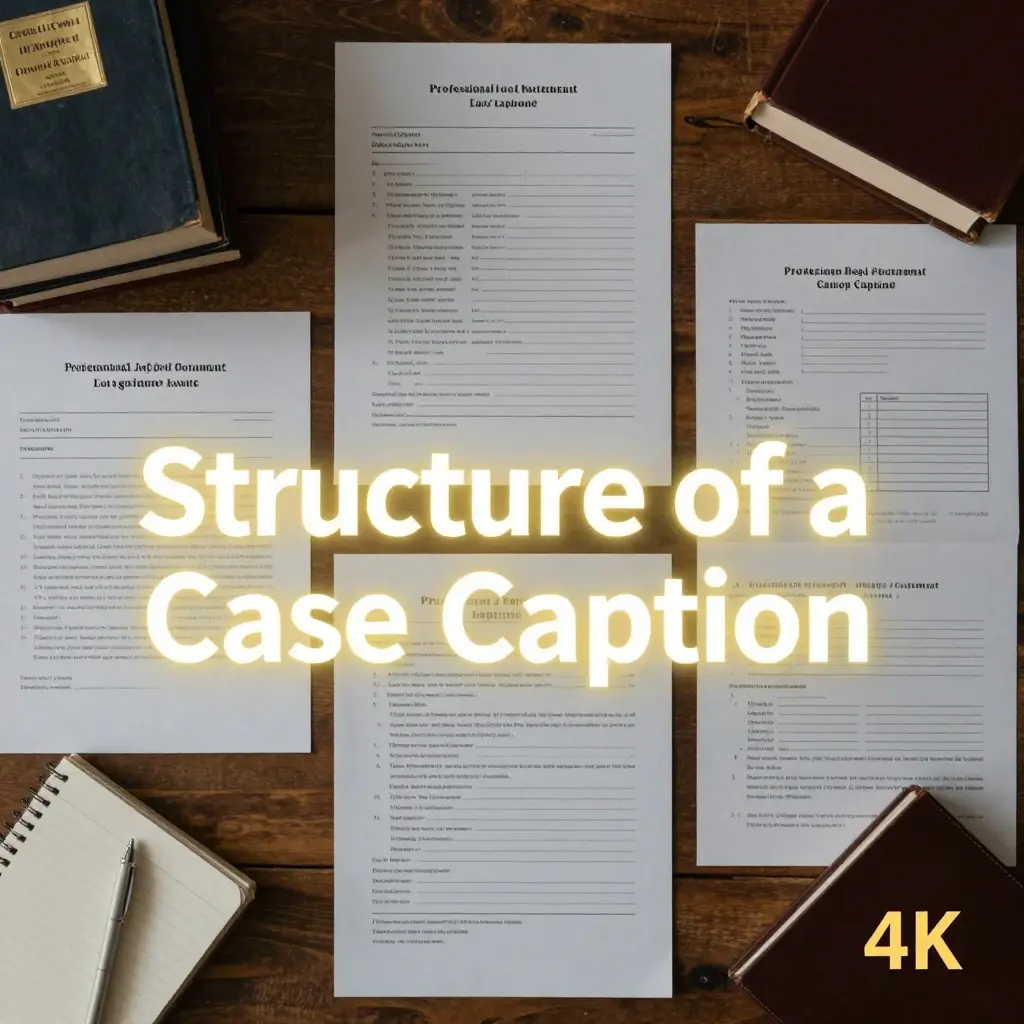
- 📄 Case name includes plaintiff vs defendant
- ⚖️ Court name appears at the top
- 🧾 Case number is uniquely assigned
- 🏛️ Jurisdiction is clearly mentioned
- 📌 Filing date is often included
- 🧠 Party roles are clearly defined
- 📚 Title format follows legal standards
- 💼 Written in uppercase in many courts
- 🖥️ Digital formatting used in 2026 systems
- 📊 Consistent structure across documents
- 📂 Helps legal indexing and storage
- 🔍 Easy identification of case status
- 📢 Used in petitions and motions
- 🧷 Maintains legal document order
- 🏢 Varies by country and court level
- ⚡ Structured for clarity and speed
- 🎯 Prevents document confusion
- 💡 Supports legal automation tools
- 📜 Used in printed and digital forms
- 🧭 Standardized legal formatting rule
- ⚖️ Core legal document header format
Civil Case Caption Example
- ⚖️ Smith vs Johnson civil dispute case
- 📄 Property or contract-related lawsuits
- 🏛️ Filed in civil court jurisdiction
- 🧠 Plaintiff initiates legal action
- 📚 Defendant responds to complaint
- 📌 Common in business disputes
- 🔍 Includes monetary claim details
- 💼 Used in tort law cases
- 📊 Civil court case tracking system
- 🖥️ Digitally filed in e-courts
- 🧾 Includes civil case number
- 📢 Used in settlement negotiations
- 🧷 Legal identity for civil matters
- 🏢 Regional civil court rules apply
- 📂 Stored in civil litigation database
- ⚡ Used in property disputes
- 🎯 Contract breach identification
- 💡 Helps civil case documentation
- 📜 Standard civil legal format
- 🧭 Easy reference for lawyers
- ⚖️ Most common legal caption type
Criminal Case Caption Example
- ⚖️ State vs. defendant criminal case format
- 📄 Government prosecutes accused person
- 🏛️ Filed in criminal court system
- 🧠 Represents law enforcement action
- 📚 Includes charges and accusations
- 📌 Used in felony and misdemeanor cases
- 🔍 Identifies prosecution authority
- 💼 Common in the criminal justice system
- 📊 Criminal case indexing format
- 🖥️ Stored in digital justice records
- 🧾 Includes criminal case number
- 📢 Used in trial proceedings
- 🧷 Legal identification of offense
- 🏢 Court jurisdiction clearly shown
- 📂 Criminal database record system
- ⚡ Helps track criminal trials
- 🎯 Distinguishes accused and state
- 💡 Essential for prosecution documents
- 📜 Standard criminal caption format
- 🧭 Used in arrest-based cases
- ⚖️ Core part of criminal law
Court Format Variations
- ⚖️ Different courts use different caption styles
- 📄 Federal vs state formatting differences
- 🏛️ Supreme courts use formal layouts
- 🧠 Civil vs criminal variations exist
- 📚 International courts have unique formats
- 📌 Some include judge names
- 🔍 Formatting depends on jurisdiction rules
- 💼 Legal style guides influence structure
- 📊 Standardized within legal systems
- 🖥️ Digital courts use auto-generated captions
- 🧾 E-filing systems standardize format
- 📢 Case naming conventions differ
- 🧷 Formatting impacts legal clarity
- 🏢 Court hierarchy affects layout
- 📂 Stored differently in databases
- ⚡ Faster processing in modern courts
- 🎯 Uniformity improves legal efficiency
- 💡 Prevents document errors
- 📜 Legal writing standards enforced
- 🧭 Helps cross-border legal cases
- ⚖️ Essential for court documentation
Federal Case Caption Example
- ⚖️ United States vs Defendant format
- 📄 Used in the federal court system
- 🏛️ Includes federal jurisdiction label
- 🧠 Handles national-level cases
- 📚 Common in constitutional matters
- 📌 Includes district court name
- 🔍 Used in federal prosecutions
- 💼 Often involves government cases
- 📊 Federal docket numbering system
- 🖥️ Managed via federal e-filing
- 🧾 Case tracking in national database
- 📢 Used in appeals and trials
- 🧷 Legal federal identification
- 🏢 Strict formatting rules applied
- 📂 Stored in federal archives
- ⚡ High-level legal importance
- 🎯 Used in major legal disputes
- 💡 Standardized across US courts
- 📜 Formal legal documentation
- 🧭 Essential for federal lawyers
- ⚖️ National justice system format
State Court Caption Example
- ⚖️ State vs Individual legal format
- 📄 Used in regional court systems
- 🏛️ Managed by state judiciary
- 🧠 Handles local legal disputes
- 📚 Includes state jurisdiction name
- 📌 Common in traffic and civil cases
- 🔍 Used in local prosecution cases
- 💼 Simplified legal structure
- 📊 State court database records
- 🖥️ Integrated into e-court systems
- 🧾 Assigned state case numbers
- 📢 Used in hearings and trials
- 🧷 Legal identification at state level
- 🏢 Different rules per state
- 📂 Stored in state legal archives
- 🎯 Used in everyday legal matters
- 💡 Easy-to-understand format
- 📜 Standard court formatting rules
- 🧭 Helps legal professionals
- ⚖️ Most commonly used legal caption
Appellate Case Caption Example
- 📄 Shows appellant vs appellee
- 🏛️ Filed in appellate courts
- 🧠 Reviews lower court decisions
- 📚 Focuses on legal errors
- 📌 Includes appeal case number
- 🔍 Important in legal corrections
- 💼 Used by appellate lawyers
- 📊 Organized for the review process
- 🖥️ Digital appellate filing system
- 🧾 Includes appellate docket info
- 📢 Used in legal arguments
- 🧷 Case review identification
- 🏢 Higher court jurisdiction
- 📂 Stored in appeal records
- ⚡ Focus on legal interpretation
- 💡 Helps justice correction process
- 📜 Standard appellate format
- 🧭 Legal reasoning focused
- ⚖️ Essential in justice appeals
Supreme Court Caption Example
- ⚖️ Highest court case format
- 📄 Used in constitutional cases
- 🏛️ Supreme jurisdiction authority
- 🧠 Handles final legal appeals
- 📚 Includes national importance cases
- 📌 Very formal legal structure
- 🔍 Used in landmark rulings
- 💼 Extremely precise formatting
- 🖥️ Digitally archived permanently
- 🧾 Supreme case number system
- 📢 Used in final judgments
- 🧷 Legal highest authority label
- 🏢 Country-level jurisdiction
- 📂 Stored in national archives
- ⚡ Final decision authority
- 🎯 No higher appeal possible
- 💡 Influences national law
- 📜 Strict formatting rules
- 🧭 Legal precedent creation
- ⚖️ Top-level judicial format
Case Caption Formatting Rules
- ⚖️ Always include court name first
- 📄 Use proper party naming order
- 🏛️ Maintain jurisdiction clarity
- 📚 Use consistent capitalization rules
- 📌 Include case number correctly
- 🔍 Follow court style guides
- 💼 Ensure legal accuracy
- 📊 Keep format standardized
- 🖥️ Follow digital filing rules
- 🧾 Avoid spelling errors
- 📢 Maintain a professional tone
- 🧷 Separate parties clearly
- 🏢 Follow regional legal rules
- 📂 Use official templates
- ⚡ Ensure readability
- 🎯 Avoid formatting confusion
- 💡 Use legal citation style
- 📜 Match court requirements
- 🧭 Keep structure uniform
- ⚖️ Essential for legal validity
Common Mistakes in Case Captions
- ⚖️ Wrong party order usage
- 📄 Missing case numbers
- 🏛️ Incorrect court naming
- 🧠 Spelling errors in names
- 📚 Using informal language
- 📌 Missing jurisdiction details
- 🔍 Mixing civil and criminal formats
- 💼 Ignoring formatting rules
- 📊 Inconsistent capitalization
- 🖥️ Poor digital formatting
- 🧾 Missing identifiers
- 📢 Wrong legal structure
- 🧷 Confusing plaintiff/defendant roles
- 🏢 Incorrect court level usage
- 📂 Missing metadata fields
- ⚡ Overcomplicated formatting
- 💡 Ignoring legal standards
- 📜 Using outdated formats
- 🧭 Lack of clarity
- ⚖️ Can cause legal delays
How to Write Case Captions
- ⚖️ Identify plaintiff and defendant first
- 📄 Choose the correct court name
- 🏛️ Add jurisdiction information
- 🧠 Include case number properly
- 📚 Use standard formatting rules
- 📌 Keep structure consistent
- 🔍 Follow legal writing guides
- 💼 Use official templates
- 📊 Ensure readability
- 🧾 Double-check spelling
- 📢 Maintain a formal tone
- 🧷 Separate parties clearly
- 🏢 Match court requirements
- 📂 Save in correct format
- ⚡ Keep it concise
- 🎯 Avoid unnecessary text
- 💡 Follow legal conventions
- 🧭 Ensure accuracy
- ⚖️ Submit to the court system
Legal Document Examples Usage
- ⚖️ Used in petitions and motions
- 📄 Appears in court judgments
- 🏛️ Included in legal briefs
- 📚 Used in academic legal writing
- 📌 Referenced in lawsuits
- 🔍 Used in legal research
- 💼 Important for attorneys
- 📊 Stored in legal databases
- 🖥️ Used in e-filing systems
- 🧾 Essential for documentation
- 📢 Used in court hearings
- 🧷 Helps legal referencing
- 🏢 Used across jurisdictions
- 📂 Stored for future reference
- ⚡ Supports legal arguments
- 🎯 Used in evidence files
- 💡 Important for clarity
- 📜 Standard legal format usage
- 🧭 Helps case identification
- ⚖️ Core legal documentation tool
Case Caption Templates
- ⚖️ Standard fill-in-the-blank formats
- 📄 Used by lawyers and clerks
- 🏛️ Predefined court structures
- 🧠 Saves drafting time
- 📚 Ensures consistency
- 📌 Includes all legal elements
- 🔍 Used in multiple case types
- 💼 Improves legal accuracy
- 📊 Widely used in law firms
- 🖥️ Available in digital formats
- 🧾 Reduces errors in filing
- 📢 Helps beginners in law
- 🧷 Easy to customize
- 🏢 Court-approved formats
- 📂 Stored in legal systems
- ⚡ Speeds up documentation
- 🎯 Ensures compliance
- 💡 Standard legal tool
- 📜 Used globally in law
- 🧭 Improves workflow
- ⚖️ Essential drafting resource
Importance in Legal Writing
- ⚖️ Ensures document clarity
- 📄 Improves legal communication
- 🏛️ Standardizes court filings
- 🧠 Helps case identification
- 📚 Supports legal accuracy
- 📌 Reduces confusion
- 🔍 Improves research efficiency
- 💼 Used in all legal systems
- 📊 Enhances documentation structure
- 🖥️ Supports digital law systems
- 🧾 Ensures professional format
- 📢 Used in court submissions
- 🧷 Maintains legal order
- 🏢 Critical for attorneys
- 📂 Helps legal storage systems
- ⚡ Speeds up case handling
- 🎯 Prevents errors
- 💡 Essential for law students
- 📜 Standard writing requirement
- 🧭 Supports legal analysis
- ⚖️ Core legal writing element
Modern Digital Filing Captions (2026)
- ⚖️ AI-assisted case caption generation
- 📄 Auto-filled legal templates
- 🏛️ Fully digital court systems
- 🧠 Smart legal formatting tools
- 📚 Cloud-based legal storage
- 📌 Automated case indexing
- 🔍 AI error detection systems
- 💼 Faster legal processing
- 📊 Real-time case tracking
- 🖥️ E-court integration systems
- 🧾 Digital case identification
- 📢 Instant legal updates
- 🧷 Blockchain legal records emerging
- 🏢 Unified court databases
- 📂 Paperless legal workflows
- 🎯 AI reduces formatting mistakes
- 💡 Legal tech transformation
- 📜 Standardized global formats
- 🧭 Smart legal assistants
- ⚖️ Future of legal documentation
FAQs
1: What is a case caption example?
A: It is the official title block of a legal case showing parties, court, and case number.
2: Why is a case caption important?
A: It ensures proper identification and organization of legal documents.
3: What are the main parts of a case caption?
A: Court name, parties involved, case number, and jurisdiction.
4: Do all courts use the same format?
A: No, formats vary between federal, state, and international courts.
5: Can case captions be automated?
A: Yes, modern e-filing systems in 2026 use AI-generated captions.
6: Who uses case captions?
A: Lawyers, judges, clerks, and legal researchers.
Conclusion:
Case caption are the backbone of legal documentation, ensuring every case is properly identified, organized, and processed within the judicial system.
From civil disputes to Supreme Court rulings, these structured headings make legal communication clear and efficient.
Understanding how to write and interpret them is essential for law students, legal professionals, and researchers.
Mastering case captions means mastering the foundation of legal writing: accuracy, clarity, and structure.

James Anderson is a passionate writer and thought leader known for his insightful storytelling and powerful ideas. With years of experience in content creation and literature, he brings creativity and depth to every piece he writes. His work inspires readers to think differently and explore new perspectives.