
Whats closed caption are words shown on videos and TV screens.
They help people read what people are saying.
They can also show sounds like music, clapping, or a door closing.
This helps people who have difficulty hearing understand the video better.
In 2026, many apps like YouTube, Netflix, TikTok, and Instagram use closed captions.
Many people watch videos without sound, so captions help them read the words.
Closed captions help people read the words in videos, movies, games, shows, and online classes.
What Are Closed Captions
- 📺 Closed captions display spoken words as on-screen text
- 🔊 They include dialogue and important sound descriptions
- 🎵 Music cues are often written inside captions
- 🧏 Captions help deaf and hard-of-hearing viewers
- 🌍 They make content easier for global audiences
- 📱 Social media videos use captions heavily in 2026
- 🎬 Streaming services rely on captions for accessibility
- 🖥 Captions improve understanding in noisy environments
- 🧠 Reading captions can improve focus and comprehension
- ✨ Closed captions are different from subtitles
- 🎧 Sound effects are included in caption text
- 📖 Captions help language learners understand conversations
- 🔥 TikTok creators use captions for higher engagement
- 📈 Captions increase average watch time significantly
- 💡 Captions make videos easier to consume silently
- 🗣 Speaker names can appear in captions
- 🎮 Modern games now include accessibility captions
- 🌙 Captions help during late-night viewing without sound
- 🚀 Businesses use captions for marketing videos
- 🎥 Captions improve viewer retention across platforms
- 💬 Closed captions make digital media more inclusive
How Closed Captions Work
- ⚙️ Captions convert audio into readable text
- 🎙 Speech recognition technology creates automatic captions
- 🖥 AI tools now generate captions instantly
- ✍ Human editors improve caption accuracy
- 📺 Captions appear synced with spoken dialogue
- ⏱ Timing matters for smooth reading experiences
- 🔊 Audio signals trigger caption display systems
- 📱 Streaming apps support customizable caption settings
- 🌍 Some captions support multiple languages
- 💡 Captions can identify background sounds
- 🧠 AI learns accents and speech patterns better in 2026
- 🎬 Movie captions are professionally reviewed
- 📖 Live TV captions often use real-time transcription
- 🚀 Fast internet improves live caption syncing
- 🗣 Voice-to-text systems power modern captions
- 🎮 Gaming captions now include environmental sounds
- 📈 Machine learning keeps improving caption quality
- 🎵 Music lyrics sometimes appear inside captions
- 🔥 Social platforms auto-generate captions automatically
- 🌙 Smart TVs include advanced caption controls
- ✨ Captions are now part of accessibility standards
Difference Between Closed Captions and Subtitles
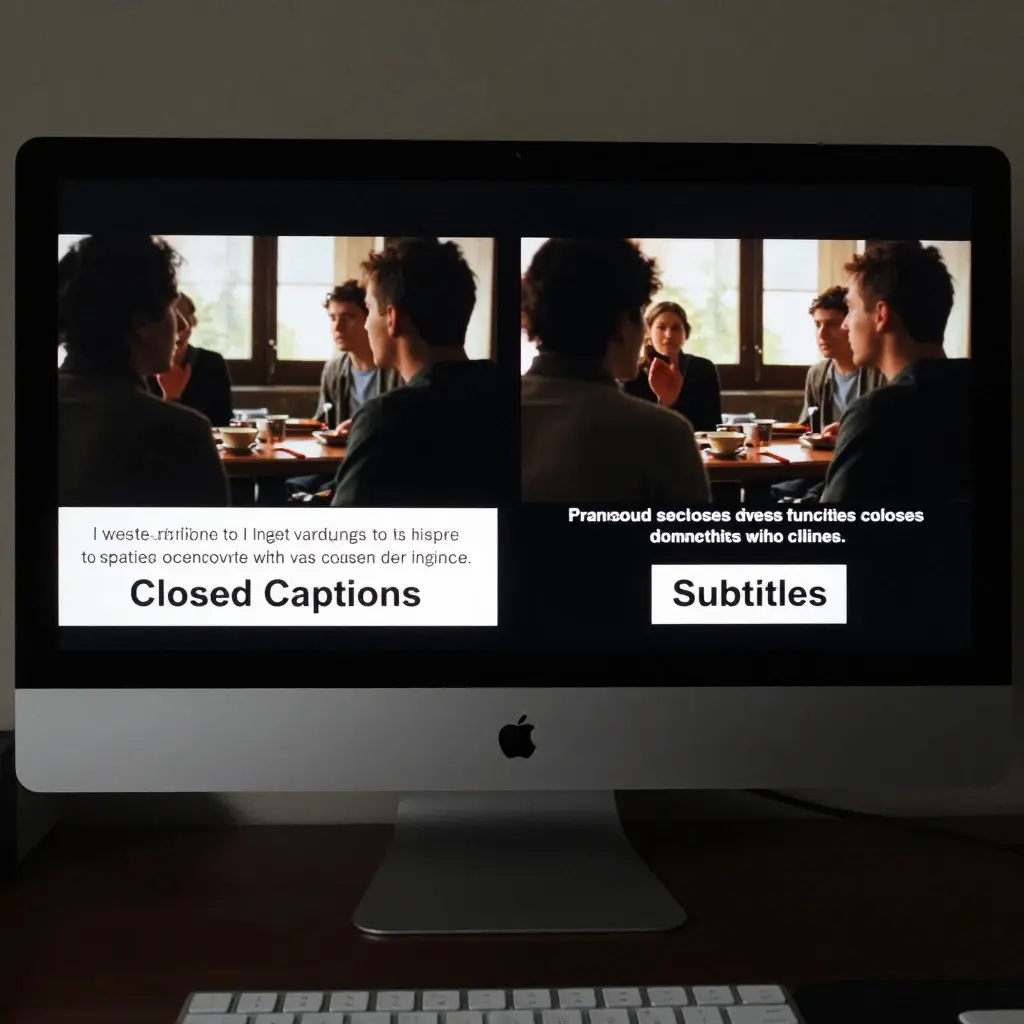
- 📺 Closed captions include sound effects and audio cues
- 🌍 Subtitles mainly translate spoken dialogue only
- 🔊 Captions describe sounds like laughter or explosions
- 🎵 Music descriptions appear inside closed captions
- 🗣 Subtitles focus mainly on spoken words
- 🧏 Captions are designed for accessibility purposes
- ✨ Subtitles are often used for language translation
- 📖 Captions may identify who is speaking
- 🎬 Streaming platforms support both options separately
- 💡 Closed captions improve accessibility compliance
- 🌙 Captions help when audio cannot be heard clearly
- 🎧 Subtitles usually skip environmental sound descriptions
- 🚀 Both improve viewer understanding differently
- 📱 Social media commonly uses auto-subtitles now
- 🔥 Captions create better engagement on silent videos
- 🖥 Closed captions can usually be turned off
- 📈 Businesses use captions to reach wider audiences
- 🎮 Modern games now support both captions and subtitles
- 💬 Captions provide more complete context
- 🧠 Language learners benefit from subtitles and captions
- 🌟 Accessibility laws often require closed captions specifically
Why Closed Captions Matter in 2026
- 🌍 Accessibility is more important than ever online
- 📱 Most people watch videos without sound sometimes
- 🔥 Captions increase social media engagement dramatically
- 📈 Videos with captions usually get more watch time
- 🎬 Streaming competition pushes accessibility improvements
- 🧏 Millions rely on captions daily worldwide
- 💡 Captions improve understanding in loud environments
- 🎧 Offices and public places encourage silent viewing
- 🖥 Educational content depends heavily on captions
- 🚀 Brands use captions for better audience retention
- ✨ Captions help creators reach international viewers
- 📖 Students learn faster with readable dialogue
- 🌙 Nighttime viewing becomes easier with captions
- 🎮 Gamers use captions for immersive experiences
- 🧠 Reading while listening improves memory retention
- 💬 Captions increase content inclusivity
- 📺 TV networks follow strict accessibility regulations
- 🔊 AI-powered captions are becoming highly accurate
- 🎵 Music videos use stylish captions for trends
- 📊 SEO benefits improve discoverability online
- 🌟 Closed captions are now considered essential content features
Benefits of Closed Captions
- 📈 Higher engagement on social media videos
- 🧠 Better understanding of complex dialogue
- 🌍 Improved accessibility for global audiences
- 🔊 Easier viewing in noisy environments
- 📱 Silent scrolling becomes more effective
- 🎬 Enhanced movie and TV experiences
- 📖 Better language learning opportunities
- 🚀 Increased video retention rates
- 💡 Improved focus while watching educational content
- 🎧 Better understanding of accents and speech styles
- 🌙 Quiet viewing without disturbing others
- 💬 More inclusive online communication
- 🎮 Better gaming accessibility experiences
- ✨ Improved comprehension during fast conversations
- 📺 Accessibility compliance for businesses and creators
- 🧏 Essential support for hearing-impaired audiences
- 🔥 Higher TikTok and Instagram Reel engagement
- 🖥 Easier multitasking while consuming content
- 🎵 Captions clarify lyrics and music dialogue
- 📊 Better SEO for searchable video content
- 🌟 Captions make digital media universally accessible
Types of Closed Captions
- 📺 Standard TV captions remain widely used
- 🎬 Streaming captions are customizable on apps
- 📱 Social media auto-captions dominate short videos
- 🔴 Live captions work during livestreams
- 🧠 AI-generated captions are trending in 2026
- ✍ Human-made captions offer better accuracy
- 🌍 Multilingual captions support international viewers
- 🎮 Gaming captions include environmental audio descriptions
- 📖 Educational captions simplify online learning
- 🎵 Lyric captions are common in music videos
- 🔊 Real-time captions appear during live broadcasts
- 💡 Interactive captions allow customization features
- 🖥 Smart TV captions support advanced settings
- 🚀 Podcast captions improve accessibility
- 🎧 Cinema captions support theater accessibility
- 🌙 Mobile captions improve late-night browsing
- 📊 Marketing video captions boost engagement
- 🔥 Reels and Shorts use stylized captions heavily
- 💬 Zoom and meeting captions improve communication
- ✨ Personalized caption styles are growing rapidly
- 🌟 Accessibility captions continue evolving with AI
Closed Captions on Streaming Platforms
- 📺 Netflix offers advanced caption customization
- 🎬 Hulu supports multilingual closed captions
- ▶️ YouTube auto-generates captions instantly
- 📱 TikTok captions improve silent viewing engagement
- 🍿 Disney+ includes accessibility-focused caption settings
- 🖥 Amazon Prime Video supports custom subtitle styles
- 🎧 Spotify now offers podcast captions
- 🌍 Streaming captions support international audiences
- 💡 Captions improve binge-watching experiences
- 📖 Educational streaming apps rely on captions heavily
- 🚀 AI improves streaming caption accuracy yearly
- 🔥 Reels and Shorts thrive with captions enabled
- 🌙 Captions make nighttime streaming easier
- 🎮 Gaming streams use live caption technology
- 📈 Platforms report higher retention with captions
- 💬 Viewer satisfaction increases with readable content
- 🧠 Captions help viewers understand accents better
- 🎵 Music streaming videos now include lyric captions
- 📺 Smart TVs support quick caption controls
- ✨ Accessibility settings are easier than ever in 2026
- 🌟 Captions are becoming default on many platforms
How to Turn On Closed Captions
- 📱 Open video settings on your device
- ⚙️ Look for the CC button or subtitle icon
- 📺 Smart TVs include caption settings in menus
- 🎬 Streaming apps provide caption customization options
- 🖥 Browser players usually have caption controls
- 🔊 Captions can often be toggled instantly
- 🌍 Select preferred language options if available
- 📖 Customize text size for better readability
- ✨ Choose caption colors and backgrounds
- 🎧 Some apps remember caption preferences automatically
- 🚀 Mobile apps simplify caption activation in 2026
- 📱 TikTok auto-captions can be enabled manually
- 💡 YouTube allows real-time caption translation
- 🌙 Night viewing improves with larger captions
- 🧠 Accessibility settings help personalize experiences
- 🎮 Console games include caption options in settings
- 📊 Business webinars often support live captions
- 🔥 Livestream platforms offer automatic captions
- 💬 Zoom meetings include AI-powered captions
- 📺 Cable TV remotes often have dedicated CC buttons
- 🌟 Caption controls are becoming more user-friendly yearly
Best Closed Caption Features in 2026
- 🤖 AI-generated captions with near-human accuracy
- 📱 Real-time social media captions
- 🌍 Instant caption translation into multiple languages
- ✨ Stylish animated captions for creators
- 🧠 Personalized AI caption recommendations
- 🎬 Better synchronization with spoken dialogue
- 🔊 Advanced sound effect descriptions
- 📖 Adjustable font styles and colors
- 💡 Accessibility-first video interfaces
- 🚀 Faster live caption generation technology
- 🎮 Immersive gaming caption systems
- 📺 Smart TVs with voice-controlled captions
- 🔥 TikTok-style dynamic text captions are trending heavily
- 🎵 Karaoke-style lyric highlighting features
- 🌙 Eye-friendly dark mode caption designs
- 📈 SEO-friendly searchable video captions
- 💬 Real-time meeting transcription systems
- 🎧 Podcast captions improving discoverability
- 🖥 Multi-device caption syncing support
- 📱 AI auto-correction improving caption quality
- 🌟 Inclusive viewing experiences are becoming industry standards
Closed Caption for Social Media
- 📱 Silent scrolling increased caption importance massively
- 🔥 Captions boost Reel and TikTok watch time
- 💬 Viewers engage more with readable videos
- 🎬 Instagram creators heavily rely on captions
- ✨ Dynamic captions improve visual storytelling
- 📈 Captions increase shares and saves significantly
- 🎵 Music-based videos use synced lyric captions
- 🌍 Global audiences understand videos more easily
- 📖 Educational creators improve comprehension with captions
- 🚀 AI tools make caption editing simple
- 🎧 Captions improve podcast clips on social media
- 💡 Bold text styles increase audience attention
- 🌙 Nighttime mobile viewing becomes easier
- 🧠 Captions help viewers process information faster
- 🎮 Gaming creators use captions for accessibility
- 📺 YouTube Shorts depend heavily on readable text
- 🔊 Sound-off viewing trends continue growing in 2026
- 💖 Emotional captions create stronger audience connections
- 📊 Marketing campaigns perform better with captions
- ☀️ Lifestyle influencers use aesthetic caption designs
- 🌟 Captions are now essential for viral content creation
Closed Captions for Educations
- 📖 Students understand lessons more effectively
- 🧠 Captions improve memory retention during lectures
- 🌍 Language learners benefit from readable dialogue
- 🎧 Online classes use captions heavily now
- 💡 Complex terms become easier to follow
- 🖥 E-learning platforms support advanced captions
- 📱 Mobile learning improves with caption accessibility
- 🚀 Educational creators reach wider audiences
- 🔊 Captions clarify difficult accents and speech patterns
- 📺 Recorded lectures become easier to review
- ✨ Accessibility compliance matters in education systems
- 📊 Students multitask better with captions enabled
- 🎬 Video tutorials become easier to understand
- 🌙 Quiet study sessions work better with captions
- 💬 Group discussions become more inclusive
- 📖 Reading and listening together improve learning speed
- 🎮 Educational games now support captions widely
- 🔥 Short-form educational videos rely on captions
- 🌍 International students benefit from translated captions
- 🎵 Music education uses lyric captions effectively
- 🌟 Captions are reshaping digital education worldwide
Caption Closed and Accessibility
- 🧏 Captions support deaf and hard-of-hearing communities
- 🌍 Accessibility creates more inclusive online spaces
- 📺 Many countries legally require TV captions
- 💡 Streaming platforms prioritize accessible content
- 🎬 Movie theaters increasingly support captions
- 📱 Mobile accessibility features continue improving
- 🚀 AI accessibility tools evolve rapidly in 2026
- 🔊 Captions help viewers with auditory processing issues
- 🧠 Neurodivergent audiences often benefit from captions
- ✨ Accessibility improves overall user experiences
- 🎧 Podcasts become more inclusive with transcripts
- 💬 Workplace meetings use captions for better communication
- 🌙 Quiet environments become easier for media consumption
- 📈 Accessible content reaches larger audiences
- 🖥 Businesses avoid legal issues with proper captions
- 📖 Educational equality improves through accessibility tools
- 🎮 Gaming accessibility now includes detailed captions
- 🔥 Social awareness around accessibility keeps growing
- 🌺 Inclusive creators gain stronger audience trust
- 📊 Accessibility boosts brand reputation significantly
- 🌟 Closed captions are central to digital inclusivity
AI and the Future of Closed Captions
- 🤖 AI captions are becoming nearly perfect
- 📱 Real-time mobile captions continue improving
- 🌍 Instant language translation is expanding rapidly
- 🎬 AI detects emotions and sound effects better
- 📖 Smart captions adapt to viewer preferences
- 🔊 Voice recognition accuracy improves yearly
- 🚀 Faster processing reduces live caption delays
- 🧠 Machine learning understands accents more effectively
- 💡 AI-generated captions lower production costs
- ✨ Personalized caption styles are trending
- 🎧 Podcasts gain automated caption support
- 🌙 Smart glasses may display captions live soon
- 📺 Interactive TV captions are evolving rapidly
- 🎮 VR gaming captions are becoming immersive
- 📈 AI captions improve video SEO dramatically
- 💬 Real-time business transcription becomes standard
- 🔥 Creators rely on AI editing tools daily
- 📱 Social media apps keep upgrading caption technology
- 🌺 Accessibility innovation drives platform competition
- 🖥 Cloud-based caption systems improve scalability
- 🌟 The future of captions is smarter and more personalized
Common Closed Caption Problems
- ⚠️ Incorrect words sometimes appear in captions
- 🔊 Audio syncing delays confuse viewers
- 📺 Old TV systems may lack modern caption support
- 🌍 Translation captions can lose context
- 📱 Social media captions occasionally misinterpret slang
- 🎬 Fast dialogue causes caption timing issues
- 🧠 Strong accents challenge AI transcription systems
- 💡 Poor audio quality reduces caption accuracy
- 📖 Small text sizes hurt readability
- 🎧 Background noise can confuse caption software
- 🚀 Live events still experience occasional delays
- 🌙 Bright captions may strain eyes at night
- 📊 Auto-captions sometimes miss emotional context
- 🔥 AI-generated captions still need human review
- 🖥 Browser compatibility issues may occur
- 📱 Different devices display captions differently
- 🎮 Some games still lack detailed caption systems
- ✨ Stylized captions can distract viewers sometimes
- 💬 Speaker identification may be inaccurate occasionally
- 📺 Regional language support remains limited in some areas
- 🌟 Technology continues improving these issues yearly
Tips for Better Closed Captions
- 🎙 Use clear audio for accurate captions
- ✍ Review auto-generated captions manually
- 📖 Keep text readable and properly timed
- 🌍 Add multilingual captions for wider reach
- 💡 Use contrasting colors for readability
- 🎬 Match captions closely with spoken dialogue
- 📱 Optimize captions for mobile viewing
- 🔥 Use engaging caption styles on social media
- 🚀 Keep captions short and easy to read
- 🧠 Include sound effects when important
- 🎧 Avoid cluttering screens with excessive text
- 🌙 Use eye-friendly caption designs at night
- 📊 Test captions on multiple devices
- 💬 Identify speakers clearly when needed
- 📺 Ensure captions sync perfectly with audio
- 🎵 Add lyric captions for music content
- 🖥 Customize caption fonts for accessibility
- ✨ Keep grammar and spelling professional
- 🎮 Include environmental audio cues in games
- 📱 Use AI tools but always double-check accuracy
- 🌟 Great captions improve every viewing experience
FAQs:
1: What is the meaning of closed captions?
A: Closed captions are words on the screen that show what people are saying in a video. They also show sounds to help people understand better.
2: Are closed captions the same as subtitles?
A: No. Closed captions show talking words, sounds, and who is speaking. Subtitles usually only show the talking words.
3: Why do people use closed captions?
A: People use captions to read words on videos. Captions help people read the words in a video. They also help people learn new words and understand videos better without sound.
4: Can closed captions be turned off?
A: Yes. You can turn closed captions on or off in the video settings.
5: Which platforms support closed captions?
A: Apps like YouTube, Netflix, TikTok, Disney+, and Zoom can show words on the screen when people talk.
6: Do captions help videos perform better online?
A: They help people understand videos, enjoy watching videos, and find videos on the internet easily.
Conclusion:
Closed captions help people read words while watching videos. In 2026, many people use captions on TV, phones, YouTube, TikTok, and games. Captions help people understand videos better, even when the sound is low or off.
People use captions to read words in videos at night, in online classes, and on social media. Captions make videos easier, clearer, and more fun for everyone. Smart tools now make captions faster and better, too.

James Anderson is a passionate writer and thought leader known for his insightful storytelling and powerful ideas. With years of experience in content creation and literature, he brings creativity and depth to every piece he writes. His work inspires readers to think differently and explore new perspectives.